
If a resident calls at 8pm on a Friday because their heating has failed, will the person answering know who is at risk, who can respond that night and where to record the decision? And if it turns out the home cannot be made safe in time, can the duty team arrange suitable temporary accommodation?
From 30 November 2026, Phase 2 of Awaab’s Law extends the rules for significant hazards in social housing in England. For housing associations and local authority landlords, preparation starts with the people taking those first reports. They need enough information to recognise the risk, a clear route to escalate it and a way to record what happened. Read the 2026 amendment regulations.
What changes on 30 November?
Phase 1 introduced deadlines for emergency hazards and significant damp and mould hazards. Phase 2 extends the significant hazard rules to seven additional categories where the circumstances pose a significant risk of harm.
Excess cold
Excess heat
Falls on level surfaces, on stairs and between levels
Structural collapse
Fire and explosions
Electrical hazards
Domestic hygiene, including personal hygiene and food safety
The risk depends on what has happened and who is exposed. A heating failure can carry very different risks for a household with a newborn or an older person with a health condition, particularly during a cold spell. A damaged stair rail can be more urgent when a resident with limited mobility depends on it to reach their home. Ask what the resident can safely do, whether the situation is worsening and who else is affected. Read the government’s guidance on triaging hazards.
What are the deadlines?
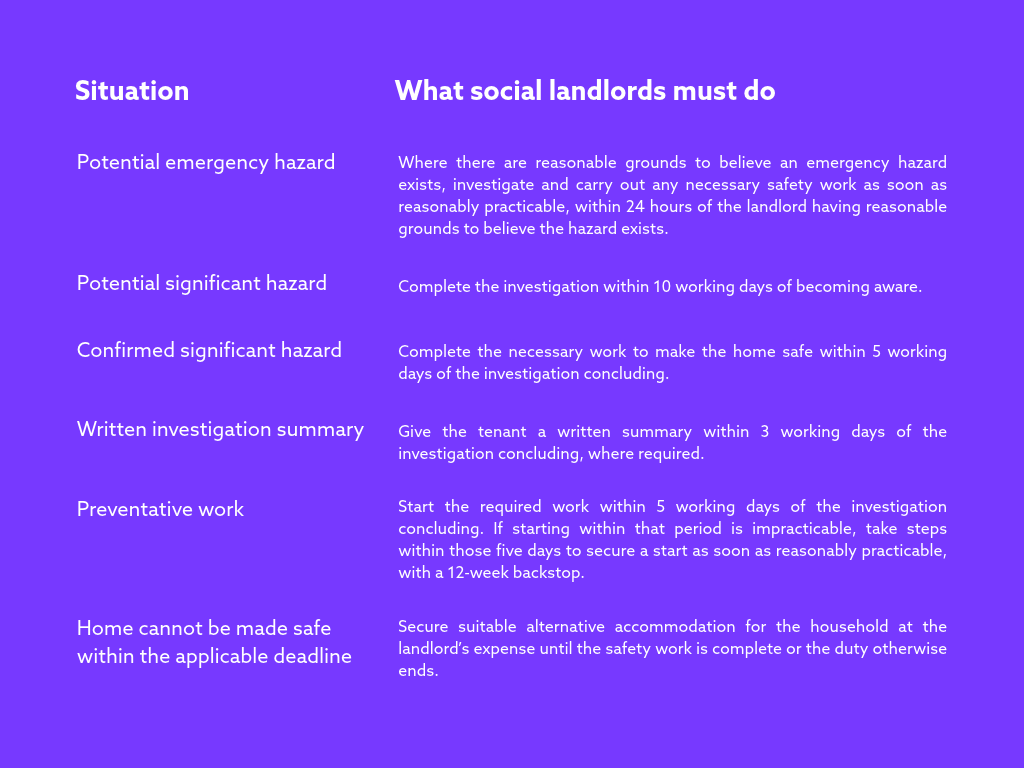
Keep tenants informed about progress, changes to appointments and what happens next. Agree in advance who can authorise a temporary move out of hours and what information they need to find accommodation that meets the household’s needs. Read the government’s Phase 2 guidance for social landlords.
Where the response can break down
The first report gets buried. A report may come from a resident, a support worker or a contractor already on site. The government guidance explains that, depending on the relationship, a landlord may be treated as aware when someone acting as its agent first learns about the hazard. Capture the original report time, keep it with the repair record and give urgent reports a route to the duty team straight away. A fresh report or material change after Phase 2 starts can bring an existing issue within the new rules. See the government guidance on awareness and triage.
Teams have different pieces of the picture. Customer services may know that the resident has reported the issue twice, while the repairs team holds the contractor’s notes and the housing team knows about the household’s access needs. Give those teams a way to share relevant information, confirm who has picked up the case and record when the resident will hear from you again.
Communal reports go to the wrong team. Agree who takes ownership of reports involving shared stairs, entrances and communal heating, especially in mixed-tenure buildings. The landlord’s responsibility for the area matters. If the report concerns a fire hazard in common parts covered by the Fire Safety Order, it needs to go promptly to the building’s Responsible Person or through the appropriate fire safety procedure. See the government guidance on the interaction with fire safety.
Delays can leave residents exposed to harm and make it harder for a landlord to demonstrate what it did and when. Tenants can use the landlord’s complaints process, take eligible complaints to the Housing Ombudsman or bring a breach-of-contract claim. A court can order repairs and may award compensation or legal costs. Serious or systemic failures can also draw scrutiny from the Regulator of Social Housing. Read the government’s guidance on enforcement.
How PropCall supports your response
We work with social housing associations, care and supported housing providers, and local authorities. Our trained property managers answer in your organisation’s name and follow your agreed procedures. They ask about the condition of the property, what has changed and how it affects the people living there. They record the details and, in line with your instructions, escalate to your duty officer, specialist team or approved contractor. See PropCall’s social housing call handling service.
Call recordings help you review the first report. We retain call recordings in line with the applicable retention arrangements. Alongside time-stamped call notes and records of contact and escalation attempts, a recording can help your team establish what the resident told us, what advice they received and what happened next.
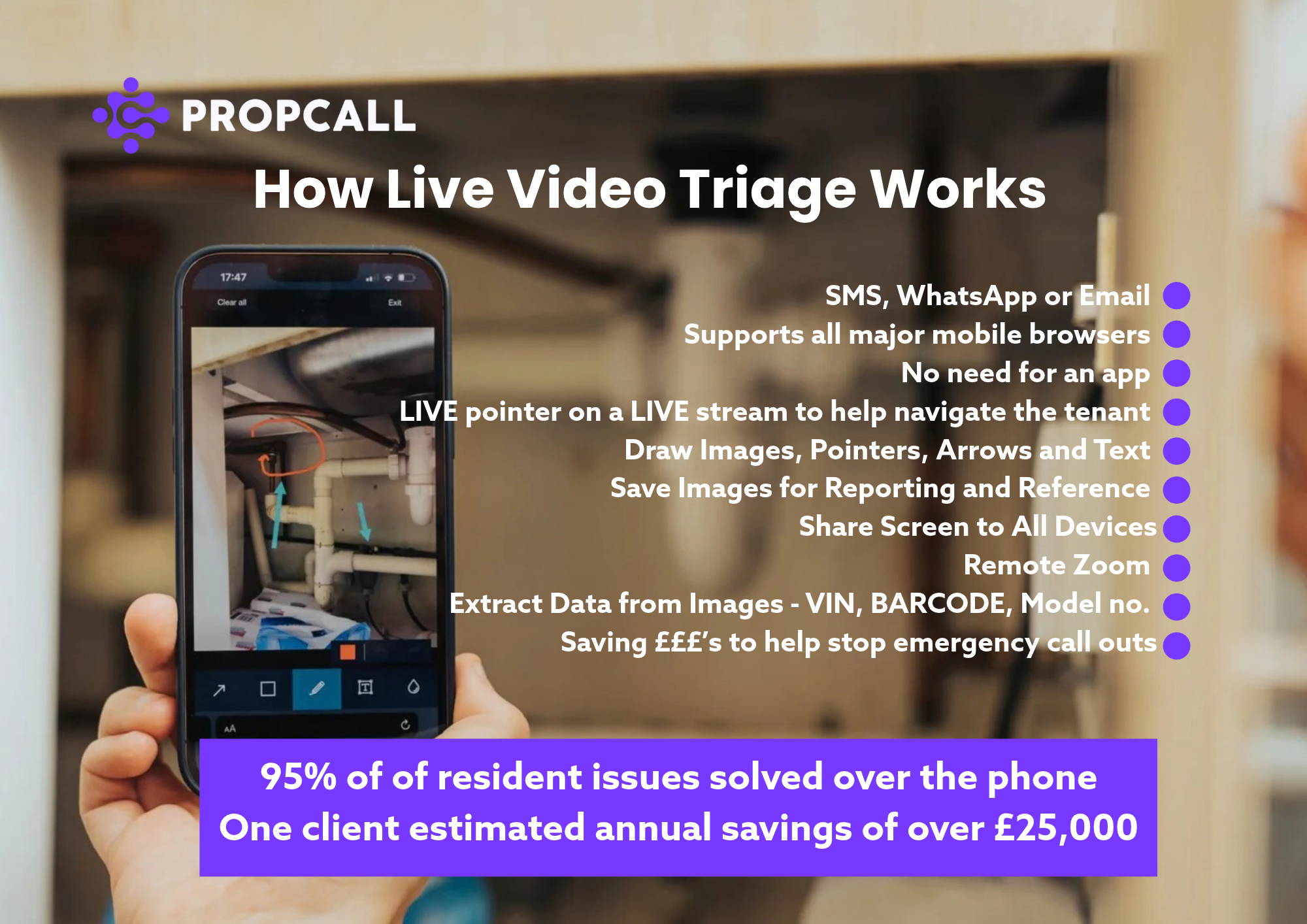
Video triage gives your team a clearer view. When it is safe and the resident is comfortable taking part, we can send a link that opens in their phone’s browser. A resident can show our property manager what they can see from a safe position. We can also retain video recordings or images where agreed with the client, subject to the applicable privacy, access and retention arrangements. Where there is immediate danger, we follow the emergency escalation procedure straight away. See how PropCall’s video triage works.
Your duty team gets the information it needs to act. We agree with you what to capture, who to contact first and where to escalate if the primary contact is unavailable. Your teams can use that audit trail alongside technical findings, repair records and tenant communications. The landlord retains responsibility for statutory investigations, safety works, temporary accommodation and compliance.
Test your out of hours response before the deadline
Pick a report your team could receive this weekend, such as a heating failure affecting a resident with a serious health condition. Run it through your current process, from the first call to confirmation that the home is safe.
Can the person answering see repeat reports and relevant household needs?
Who takes ownership, and who is the fallback if they cannot be reached?
Who can arrange suitable temporary accommodation overnight?
Can your team retrieve the original report and see who acted, when they acted and what the resident was told?
Talk to PropCall about your Phase 2 out-of-hours cover. We can review your call scripts, escalation routes and reporting requirements with you and show how our property managers, call recordings and video triage fit into your response. Contact the PropCall team.